Share
Share


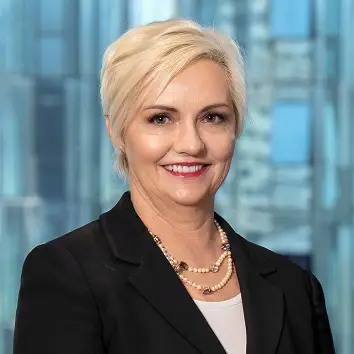
Nicole is a Partner in our financial lines practice in Australia and has served as a Director of United Way Australia for several years. United Way Australia is a national non-profit charity focused on improving outcomes for children and families, particularly through early literacy and support for disadvantaged communities.
Tell us about your role at Kennedys and your specialism.
I am a Partner in the financial lines practice of the Firm; I am based in Melbourne and co-lead the financial lines practice with James Melvin in Sydney.
In my day to day practice am involved in professional indemnity disputes, principally on behalf of construction professionals, accounting professionals, financial sector professionals. I act in directors’ and officers’ claims and investigations – often involving liquidation and administration of companies and I also undertake regulatory defence of prosecution by Australian regulators like ASIC, APRA, the ACCC and I also provide coverage advice to insurers across all aspects of financial lines products and general insurance contracts.
I act for London market Lloyd’s syndicates, company market insurers and local insurers. I also advise Australian life insurers in relation to commercial litigation and regulatory investigations and prosecutions. My clients include both Australian and international insurers.
What first inspired you to get involved with United Way Australia?
Previously, I was a Partner at Norton Rose Fulbright Australia for 18 years. During that time, I also sat on the firm’s board. In around 2018 our Chief Executive Partner asked me whether I would be willing to be the firm’s representative to partner with United Way because he thought it was important for us to have strong relationships with charities as part of our corporate social responsibility priorities.
I went and met with the Chair at the time, Liz Dibbs, who has just retired. Liz is a lawyer and was previously very senior within PwC. She is incredibly inspirational when it comes to giving back to the community, and she really explained clearly what United Way does for disadvantaged children, principally children and teenagers, and how we could help.
As a result of meeting with Liz, I decided that I would become involved. At that time, I joined what was called the Melbourne Committee. Initially I joined as a committee member reporting into the national board and was responsible for building the presence of United Way in Melbourne and Victoria and supporting our work with local communities.
After a couple of years, I was invited to become a director of the United Way board. They really wanted someone with a risk background, which I obviously had through my insurance advisory and legal practice, so I joined the board about five or six years ago.
A very small effort on my part can have a big impact for someone else... It continually reminds me not to take for granted how lucky we are.
What does being a director involve, and what impact have you seen?
The CEO and executive team prepare the strategic plan for United Way. As a board we provide governance and direction and endorse or modify the strategy, and make decisions about implementation and monitor outcomes for business planning. The exec team implement the strategy and report regularly to the board on the progress. We monitor progress, financial performance, how we are tracking against budget, and sometimes we refine the strategy and direction.
A key focus of the board is building relationships with corporates who support our vision and fund raising to support our work.
The board and board members also have strong relationships with local, state and Commonwealth governments. By building good community engagement, we are more likely to win funding from those different levels of government. In Australia we rely heavily on government support and individual philanthropic support. We regularly apply to charitable trusts for grants, but it is not continuous funding. We need to have good relationships with government, particularly local government, apply for grants, and where we succeed report against the grant purpose. This is hard work and we might win one in twenty.
We recently received funding for a PhD graduate student, (Dr) Clare Galea, to do research for us, so that we had strong evidence-based material to show our benefactors and government that having books in the home from birth until five years old made a measurable difference to that child being ready for school, and that progression through life would have a better outcome. She produced her research paper which has been a game changer for our work. Clare has been invited to present her findings all around the world. The quantitative and qualitative date positively demonstrates that the dPIL programme makes a real difference to disadvantaged children.
As a mum myself, I see first-hand how important those early moments of reading are for my children’s development. Supporting United Way connects directly with how I interact with my own children. When you have your own kids, you sit with them and read books – when they are babies - the soft cloth books and sensory books that are interactive, with mirrors, textures and flaps, focused on touch – are the first time a child is exposed to a book. You may not be reading a story, but you are getting your baby used to a book, you can make up a story and bond in a special way.
Some of the families who access the books through the Dolly Parton Imagination Library are illiterate and lack confidence in reading, but they know the importance of literacy for their own children. Parents can make up the stories and can see the response they get from their babies.
We have people on the ground at United Way engage early with mothers, when the babies are first born. They work with local libraries and the health nurse assigned by local government to families, whose responsibility is to measure babies and monitor a newborn’s progress. During those early interactions, the community nurse can sign families up for the Imagination Library. Grass roots interactions has made a huge difference and sparked parents to seek support for literacy, including local trade-based college short courses, and to seek out opportunities themselves to learn how to read.
Where do you see opportunities for the firm to support communities in Australia? And for colleagues who feel too busy to volunteer, what would you say?
United Way always needs money, but it doesn’t have to be huge donations. One of the ways we support that is through the annual walkathon. We sign up volunteers from the Melbourne office and take part together. It takes place around Lakeside Drive, which is where the Melbourne Grand Prix race is held. We usually have a function alongside it, people come along, raise money and pay $50 per employee to take part. The Chairperson speaks about the charity, others share their experience, and we raise funds but also a chance to understand the impact. Last year the walkathon raised enough money to help 600 local children.
We also offer other volunteering opportunities, particularly with students from disadvantaged communities aged 15 or 16, who are getting to the point where they might finish school or go off into a trade. Corporates can come in and help with interviewing skills and explaining the world of work. Some of these young people don’t come from backgrounds where access to professional office environments is normal, so simply coming into an office and seeing how it works gives them a perspective they wouldn’t otherwise have.
There are plenty of volunteering options, and you don’t have to be a director or sit on a board. You can do really practical things. I was talking to a client the other day, Markel, they are a big global insurer across the US, UK, Australia and Europe. They recently ran a charity event for their team where they chopped up bacon and vegetables to make carbonara for people who need food, working with a kitchen that supplies meals to those in need. There are all sorts of things we can do to give back.
Staff can also donate directly from their salary through a salary sacrifice scheme. Kennedys will often jointly fund the challenge entry fees for employees, as it did for the November 2024 campaign.
As a director I volunteer around 6 hours a month as part of my role. However, you don’t need to volunteer 6 hours a month to make a difference. Even taking part in a few activities a year can have an impact.
“Give to Gain” – what have you gained personally from giving back?
It’s taught me that a very small effort on my part can have a big impact for someone else. Six hours a month can make an impact. It’s reinforced the value of diverse backgrounds and how important it is to be mindful of the perspective that comes from different experiences. It continually reminds me not to take for granted how lucky we are.
It’s extremely rewarding and all I can say is ‘Do it!’
Explore International Women’s Day insights, events and activity
Visit the IWD hub