Share
Share


International Women’s Day this year focuses on the idea of giving to gain. What have you gained from working on pro bono activities like the School Consent Project?
Working on pro bono activities such as the Schools Consent Project has very much reflected the idea of giving to gain. While the work is about giving back in a meaningful way, I have gained valuable skills in communication, collaboration, and confidence that have directly supported my professional development. Co-presenting workshops has reinforced the importance of teamwork and adaptability, while engaging with young people has strengthened my ability to communicate clearly and authentically. As a woman, being involved in work that supports education around consent and respect feels particularly meaningful, and it has reinforced the value of using my voice, skills, and position to contribute to positive change while continuing to grow personally and professionally.
What does being a Pro Bono Champion mean to you?
Being a pro bono champion means getting to actually experience the values of responsibility, collaboration, and integrity by using legal skills to make a positive social impact. To me, it involves creating space for meaningful conversations about pro bono work, encouraging others to get involved, and leading by example. As I am in the early stages of my career, the role has helped me build confidence and have a sense of purpose alongside my training contract.
How did you become involved with the Schools Consent Project?
I first became involved through a virtual Lunch and Learn session, which introduced the work of the project and explained how the firm supports and encourages lawyers to get involved. The session highlighted the importance of improving young people’s understanding of sexual consent and the role of presenters in delivering clear and practical education on this. I was particularly keen to take part because of the social impact of the project. Growing up, I didn’t have much education around consent, and there was little opportunity to address misconceptions. Being part of this feels like a valuable opportunity to help bridge that gap by providing young people with accurate information at an early stage. I was also motivated by the chance to build upon my communication and presenting skills.
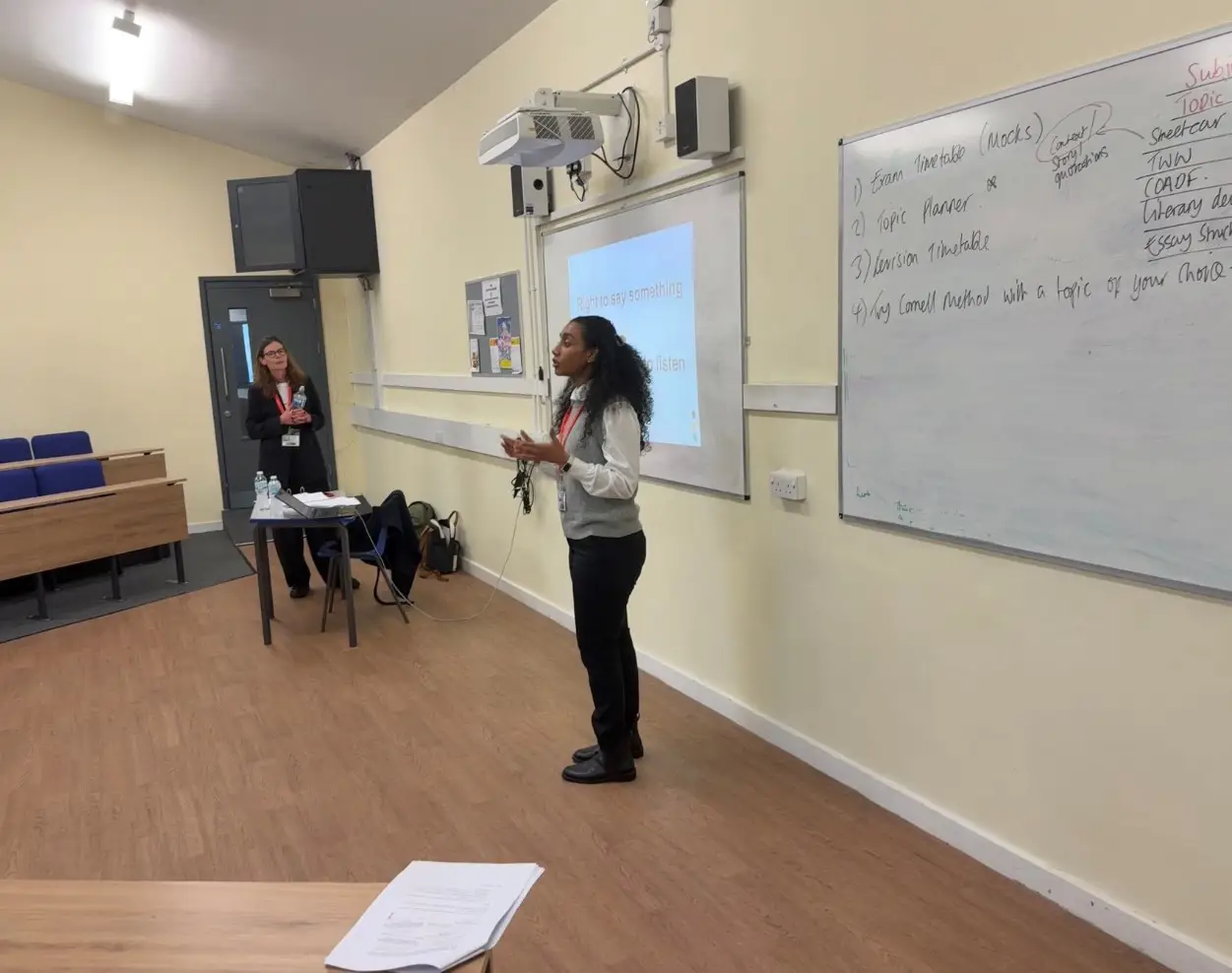
In recognition of International Women’s Day and this year’s theme Give to Gain, how do you feel this theme contributing to the growth of confidence and the development of new skills?
Most definitely! Preparing for and delivering workshops to young people requires clarity and the ability to engage an audience that is arguably one of the toughest to hold. Young people are direct, perceptive, and quick to disengage if something feels unclear or inauthentic, which challenges us as presenters to communicate with confidence and credibility. Being part of this experience has strengthened my ability to think on my feet, respond to unexpected questions, and present legal concepts in a clear and accessible way.
What has been the most rewarding part of your work with the Schools Consent Project?
The most rewarding part of my work with the Schools Consent Project has been the level of engagement from young people during the sessions. Students actively listen, ask thoughtful questions, and are willing to participate in discussions, particularly when exploring scenarios around consent. It has been especially encouraging to see them confidently voice concerns when they believe consent has not been given, showing a growing understanding of boundaries and the importance of clear communication. Seeing students challenge misconceptions in real time and engage critically with the topic highlights the impact of the sessions and reinforces the key aims of the project.

"Pro bono opportunities often push you to use your skills in new and unexpected ways and in doing so, you can discover strengths you didn’t realise you had."
What significance does the International Women’s Day theme “Give to Gain” hold for you, particularly in relation to your experience of giving back?
The theme “Give to Gain” very much resonates with me because it reflects both my personal values and my experience of pro bono work. In giving my time and skills to initiatives like the Schools Consent Project, I have gained far more than I expected, not just in terms of professional skills such as communication and collaboration, but also in perspective. Supporting education around consent, particularly as a woman, feels meaningful and aligned with the broader aim of creating safer and more equitable spaces.
The theme captures that reciprocity by investing in others and contributing to positive change, I have grown personally and professionally. It reinforces the idea that giving back is not separate from development, it is part of it.
What have you learned personally from delivering these workshops?
Delivering these workshops has been a valuable learning experience for me personally. Co-presenting, in particular, has taught me about the importance of collaboration and adaptability, as sessions work best when presenters respond to each other and to the room. I have also learned how essential it is to tailor the content and delivery to a specific audience, adjusting language, examples, and pace to suit different age groups and levels of understanding. Perhaps most importantly, I have learned that the most effective sessions are conversational rather than lecture-based, creating space for discussion, questions, and engagement, which encourages students to think critically and participate openly.
What advice would you give to someone considering getting involved in pro bono work?
My advice would be to go for it, even if it feels outside your comfort zone. Pro bono opportunities often push you to use your skills in new and unexpected ways and in doing so, you can discover strengths you didn’t realise you had. Stepping into unfamiliar situations not only builds confidence and resilience, but can also be incredibly rewarding and provides experiences that contribute to both personal and professional development.
Explore International Women’s Day insights, events and activity
Visit the IWD hub